Q900Ts 8K Qled Specs, Features, and Value: Is it worth the price tag?
Introduction
The Q900Ts 8K Qled represents one of the most ambitious pushes in consumer television: an 8K resolution panel wrapped in quantum-dot color technology and paired with aggressive upscaling and smart-TV features. For buyers who follow display trends, 8K TVs promise unmatched detail, future-proofing, and a “wow” factor in very large screen sizes. But practical buyers ask the same questions time and again: how much of that promise is realized in everyday use, does the content ecosystem justify the price, and are the trade-offs—brightness, contrast, motion handling, and connectivity—worth it?
This article analyzes the Q900Ts 8K Qled for real-world viewing scenarios: movies, sports, gaming, streamed content, and living-room setups. It breaks down core specs and features, highlights strengths and weaknesses with practical examples, compares the set against typical alternatives, and offers a buying guide to help determine whether this TV makes sense for different types of buyers.
What the Q900Ts 8K Qled brings to the table
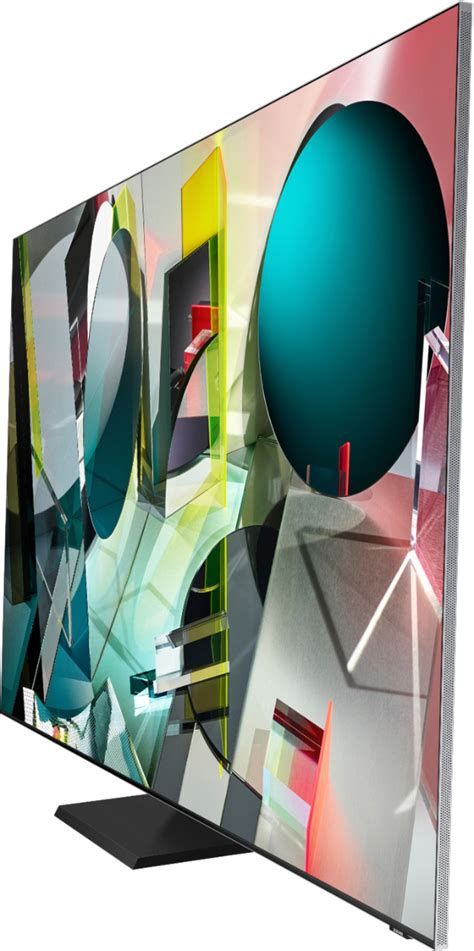
At its core, the Q900Ts is an 8K-resolution television that uses quantum-dot LED technology to boost color volume and saturation. The panel aims for a balance between high peak brightness for HDR highlights and a local-dimming strategy to improve perceived contrast. The TV also leans heavily on software: AI-driven upscaling to map lower-resolution material to the 8K pixel grid, a smart platform for streaming and apps, and picture presets tuned for different content types.
Key technical highlights (overview)
- Resolution: Native 8K (approx. 7680 x 4320). This increases pixel density substantially on very large screens compared with 4K.
- Panel technology: QLED with quantum-dot layer for extended color gamut and saturation.
- HDR support: Supports common HDR formats used by mainstream streaming and broadcast (consult specific model specs for HDR10/HDR10+ compatibility).
- Upscaling: Advanced upscaler using AI/ML techniques to reduce artifacts and improve perceived detail from 4K and lower sources.
- Gaming features: Support for modern low-latency modes and variable refresh behaviors common to HDMI 2.1 feature sets (useful for consoles and high-frame-rate PC output).
- Smart platform: A built-in smart OS with major streaming apps, voice assistants, and everyday usability enhancements.
Detailed product review and real-world performance
Picture quality and upscaling
When viewing native 8K material—still relatively rare—the Q900Ts can deliver incredible micro-detail on very large screen sizes (75" and up). Textures in scenery, distant building facades, and fine patterns appear exceptionally sharp. That said, most viewers will consume 4K, 1080p, or streamed adaptive-bit-rate content. Here the TV’s upscaler is the decisive factor.
In everyday use, the Q900Ts’ AI upscaler noticeably sharpens edges, reduces blocking and ringing introduced by compressed streams, and enhances texture without adding obviously artificial sharpening in many cases. For streaming movies and TV shows, this translates into a cleaner, more cinematic image on a 75–85" screen, where the extra resolution helps render small on-screen details more convincingly than a 4K set of the same size.
For HDR content, the QLED panel’s color volume and boost in peak luminance produce punchy highlights—sun glints, specular reflections, and bright on-screen graphics pop. However, local dimming and black-level performance are not the same as perfect pixel-level dimming; in very dark scenes the TV can show some blooming around bright elements. For buyers who watch many dark, high-contrast movies, a high-end OLED will likely produce deeper blacks, but the Q900Ts strikes a pragmatic balance: brighter HDR highlights without the risk of permanent burn-in.
Motion handling and sports
Sports fans will appreciate the Q900Ts’ motion clarity and responsive frame interpolation options. Camera pans and fast-moving players remain legible at a distance, and motion interpolation modes can smooth judder if desired. For purists, turning off interpolation retains motion naturalness with excellent motion processing that minimizes blur without introducing too much soap-opera effect.
Gaming and lag
For console and PC gamers, low input lag and support for features like Auto Low Latency Mode (ALLM) and variable refresh rate (VRR) make the Q900Ts a capable option. The combination of high refresh-rate compatibility and HDMI feature sets lets modern consoles achieve smooth frame pacing—especially beneficial when paired with 4K/120Hz or variable-frame output. Competitive gamers focused on the smallest input-lag margins may still look to gaming-specific 4K panels, but the Q900Ts is very good for immersive, visually demanding titles on large screens.
Sound and acoustics
The built-in speaker system on the Q900Ts is designed for living-room use, offering clear dialogue and decent mid-range presence. It can handle everyday viewing without a separate audio system, but it does not replace a dedicated soundbar or AV receiver for critical listening, immersive movie nights, or multi-channel surround. Buyers who want the full cinematic experience should budget for an external audio upgrade.
Discover deals on TVs & Home Theater — updated daily.
See Deals →Smart features and daily usability
The TV’s smart platform provides quick access to streaming apps, voice search, and device connectivity. The home UI prioritizes content recommendations and app shortcuts; while opinion varies on on-screen layout design, the platform offers the practical apps most viewers use. Remote control ergonomics, app responsiveness, and firmware updates are important to long-term satisfaction—on these counts the Q900Ts generally performs well, with occasional interface updates improving experience over time.
Pros & Cons
- Pros:
- 8K resolution delivers exceptional detail on very large screens.
- Quantum-dot color provides vivid, saturated hues and good color volume for HDR.
- AI upscaling improves everyday 4K and 1080p content noticeably.
- Good HDR highlights and strong peak brightness compared with OLED alternatives.
- Modern gaming-friendly features: low input lag, VRR, ALLM support.
- Smart platform covers mainstream streaming services and voice assistants.
- Cons:
- 8K content is still scarce; most viewing remains 4K or lower.
- Contrast and black-level performance fall short of the best OLEDs; some blooming on very dark scenes.
- Premium price for an 8K panel may not justify the incremental benefit for many buyers.
- Built-in audio is serviceable but not substitute for a dedicated sound system.
- Large-screen 8K requires careful room planning for seating distance and mounting.
How the Q900Ts compares (quick comparison)
| Aspect | Q900Ts 8K Qled | 4K OLED (typical) | 4K QLED (value model) |
|---|---|---|---|
| Resolution | Native 8K — best for very large screens | 4K — lower pixel count, excellent contrast | 4K — good balance of cost and clarity |
| Contrast and blacks | Good with local dimming but some blooming | Outstanding—perfect blacks and infinite contrast | Improved with local dimming; generally less deep than OLED |
| HDR highlights | Very bright peak highlights | Excellent tone mapping but lower peak brightness | Good highlights on higher-end models |
| Upscaling | Advanced AI upscaling for 4K/1080p | Strong upscaling but less visible edge in ultra-large screens | Variable—depends on model |
| Gaming | Supports VRR, ALLM, low lag | Solid support; best for contrast-sensitive games | Good value for gaming at 4K |
| Price / value | Premium; higher up-front cost | Premium; sometimes comparable price to 8K on some sizes | Best value in cost-per-inch |
Real-world use cases—who benefits most?
Home theater enthusiasts
Buyers who build a dedicated home theater and watch a lot of ultra-high-resolution or nature documentary content will appreciate the Q900Ts’ ability to render fine detail at large screen sizes. If budget allows and the room can be darkened to manage contrast, the TV produces very cinematic HDR highlights and a roomy, immersive image.
Sports and live events
Sports viewers who sit at greater distances will find the improved pixel density makes player faces and distant action easier to follow. Motion processing keeps panning and fast movement clear, which helps for football, soccer, and motorsports.
Gamers
Casual and immersive gamers will value the support for gaming features, low input lag, and smooth frame pacing. Competitive esports players who require the absolute lowest latency may prefer smaller, purpose-built gaming monitors, but console players will be well served.
General streaming households
For households that mostly stream 4K or 1080p content, the Q900Ts’ strength is its upscaling. If the family enjoys large shared viewing—movie nights, sports gatherings—the perceptual improvement over a similarly sized 4K panel can justify the purchase, but the premium should be weighed carefully against the frequency of 8K-native content consumption.
Buying guide: is the Q900Ts the right choice?
Choosing the Q900Ts should follow a practical assessment of viewing habits, room size, budget, and priorities. The following checklist helps translate technical advantages into buying criteria.
1. Screen size and viewing distance
8K resolution shows clear benefits when pixel density matters—typically on screens 75" and larger where viewers sit relatively close. If the intended screen size is smaller (55"–65"), the visible advantage over 4K diminishes. Measure expected seating distances and compare them to recommended viewing charts: if viewers sit very close, 8K is more likely to pay off.
2. Content sources
Consider how much native 8K material will be watched. Streaming catalogs in 8K are limited, broadcast 8K is rare, and most UHD Blu-rays are 4K. The Q900Ts’ upscaler makes a difference for 4K and 1080p sources, but buyers who prioritize native 8K will be waiting longer for abundant content.
Looking for the best TVs & Home Theater deals on Amazon?
See Deals →3. Room lighting and contrast needs
If the living room is bright and the TV needs to punch through ambient light, the QLED’s superior peak brightness is an advantage. For a dark, controlled home theater where absolute black levels are paramount, consider an OLED or a high-end mini-LED model with aggressive local dimming.
4. Audio plan
Plan a budget for audio. The Q900Ts’ speaker system handles voices and casual viewing, but external audio—soundbar or AV receiver with separate speakers—substantially improves immersion for movies and music.
5. Connectivity and future devices
Ensure the TV’s HDMI and networking feature set matches intended peripherals: game consoles, media servers, and AV receivers. Look for HDMI features like 4K/120Hz passthrough, VRR, and eARC support if those devices are part of the setup.
6. Calibration and settings
Out of the box, premium TVs often need minor adjustments to bring color temperature and gamma into alignment with industry standards. Budget for a professional calibration if the buyer wants the most accurate picture, or follow online calibration guides for DIY tuning.
7. Budget and resale considerations
8K TVs are premium purchases. Consider whether the buyer values near-term future-proofing and large-screen detail over a more balanced 4K investment that may offer better black levels or lower cost per inch. Also consider resale appetite—8K was once an exclusive feature, but as 8K becomes more common, early buyers can expect varying depreciation curves.
Conclusion
The Q900Ts 8K Qled is a compelling option for buyers who want cutting-edge resolution on very large screens and who value bright HDR highlights and wide color volume. Its advanced upscaling and gaming-friendly features broaden its appeal beyond the handful of native 8K sources currently available. For viewers who demand the deepest blacks for dark-scene cinema or who prioritize the lowest possible purchase price, alternatives such as high-end OLEDs or value 4K QLEDs may provide stronger value for those specific needs.
Ultimately, the Q900Ts makes the most sense for purchasers who sit relatively close to a very large screen, who appreciate the visual rewards of higher pixel density, and who plan to use the set for a mix of streaming, sports, and gaming where upscaling and brightness matter. For those who prefer the best absolute contrast and black levels, or who are budget-constrained, a careful comparison with 4K alternatives will clarify whether the extra investment in 8K is justified.