Questyle Qcc Dongle Pro Review: Real User Experience After 3 Months
I've been using the Questyle Qcc Dongle Pro as my daily carry DAC/amp for roughly three months now, pairing it with a Pixel phone, a couple of Android tablets, and a MacBook Air. I bought it with my own money, and this review is written from that real, hands-on perspective — the things I loved, the things that irritated me, and the practicalities that only show up after weeks of everyday use.
Introduction — why I picked the Qcc Dongle Pro
For the last year I had been bouncing between true wireless buds and modest-sized dongle DACs. My goal was simple: get noticeably better sound when I’m out and about, but without carrying a bulky desktop amp. The Questyle Qcc Dongle Pro promised a compact, well-built USB-C dongle with a clean, neutral sound. After three months of commuting, working from cafés, and quieter late-night listening sessions, I have a clearer sense of whether it delivers.
First impressions: build, fit and everyday handling
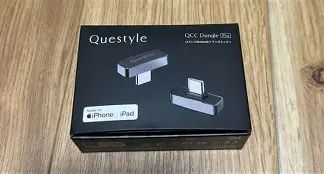
Right out of the box the Qcc Dongle Pro felt more substantial than the flimsy adapter dongles that often come bundled with phones. The body is mostly metal and has a matte finish that resists fingerprints. It's small enough to slip into my jacket pocket, but it has enough weight to feel like a precision tool rather than a disposable accessory.
One immediate practical note: the cable is short and non-detachable, which is a double-edged sword. The short length keeps it tidy and portable when plugged into a phone in my pocket, but I occasionally found it awkward when using a tablet placed on a desk. The USB-C plug feels snug in my devices, and I didn't experience frequent disconnects, but if you fidget with your phone while it's plugged in you can feel the connector pressure — not unusual for portable dongles, but worth mentioning.
Compatibility and plug-and-play experience
In my experience the Qcc Dongle Pro was essentially plug-and-play across the devices I tried. On Android it worked with no driver install; on macOS it showed up immediately as an external audio device. I also used it briefly on a Windows laptop and had the same straightforward connection. I did not need to install special drivers for normal playback, which made it convenient for travel.
That said, not every app or streaming service behaves the same when you switch to a USB DAC. Some apps let you select the device and output bit-depth, some don't. I found I had to toggle or restart a few apps on occasion to get bit-perfect output. If you're someone who expects everything to be seamless 100% of the time, be prepared for a little app fiddling now and then.
Sound quality — what I actually heard
Sound is obviously the heart of any DAC/amp review, so here’s what I noticed after three months of listening with a range of IEMs and headphones (from sensible consumer IEMs to a pair of over-ear dynamics and a couple of higher-resolution headphones I use occasionally).
Overall signature
What I found was a generally clean, transparent presentation. The Qcc Dongle Pro doesn’t overly color the sound — it leans toward a neutral, slightly analytical character. Vocals sit forward without being shouty, and instruments retain good texture. For genres where detail and instrument separation matter (classical, acoustic, lo-fi jazz), it felt very satisfying.
Bass
Bass is controlled and tight rather than boomy. I appreciated the slam on more produced electronic tracks wasn't exaggerated, which made mixes sound less congested. That said, if you’re used to a consumer-focused, boosted bass signature, you might initially find the Qcc Dongle Pro a touch restrained. For me that restraint revealed more midrange detail and cleaner bass-to-kick separation.
Mids and vocals
In my experience the mids are the star here — vocals and acoustic instruments are detailed and have good presence. I noticed subtle harmonics and textures on vocal recordings I know well that I hadn’t heard as clearly through my phone’s output. That clarity stayed true across different headphones I tested it with.
Discover deals on Audio & Headphones — updated daily.
View Offers →Treble and sparkle
Treble is clean and extended without harshness. I did not hear any noticeable sibilance introduced by the dongle itself. On some poorly-mastered tracks the treble still sounded bright, but that was the source, not the DAC. For people sensitive to highs, the Qcc made digital files sound more honest, rather than artificially softened.
Soundstage and imaging
The soundstage felt modestly wider than phone output — instruments were better separated and imaging improved. It’s not a desktop-class holographic stage, but for a pocketable device it gave a satisfying sense of space that made mixes easier to navigate.
Noise floor and hiss — real-world issues
One thing I noticed: with ultra-sensitive IEMs (very high sensitivity, low impedance), there is a faint hiss when no music is playing or at very low volumes. It wasn’t loud enough to be a deal-breaker in most environments (bus noise will cover it), but in quiet rooms it can be audible if you listen at very low levels. With common portable headphones and over-ear cans I use daily, I didn’t find the hiss objectionable.
Power and headphone drive
Overall, the Qcc Dongle Pro had enough juice to drive most consumer headphones to enjoyable volumes. With efficient IEMs and most dynamic-headphone designs it delivered healthy level and dynamics. However, with some low-sensitivity planars and very power-hungry full-size headphones, it sometimes reached its limits — you can get reasonable output but not the headroom or slam a dedicated desktop amp provides. In my experience it's a great daily driver for portable listening but not a substitute for a full-size amplifier if you primarily use demanding headphones.
Battery and heat
Because the dongle is bus-powered, it draws power from the host device. I didn't notice any significant battery drain beyond what a standard USB DAC would do when used intermittently. On longer listening sessions (couple of hours), my phone did run down faster than normal, but that’s expected with any active DAC. The unit itself gets slightly warm after extended use — warm, not hot — and I didn’t find the temperature problematic.
Durability and long-term impressions
After three months of daily usage, slipping in pockets, and occasional desk use, the Qcc Dongle Pro shows minimal wear. The metal housing resisted scratches reasonably well. My main long-term gripe is the fixed short cable — it means a single failure point and limits mounting options. If you’re clumsy with cables or prefer replaceable leads, this might be an annoyance.
Daily workflow and real-world usage notes
What I appreciated: plug it in, pick a playlist, and the sound is consistently better than phone out. Switching between my phone and laptop is straightforward, and carrying the dongle in a small sleeve with my earphones has become second nature.
What bothered me: subtle app/OS quirks. On one Android tablet I had to toggle USB audio settings within the developer options once to get the expected high-resolution handoff. I also noticed that switching apps sometimes required reselecting the USB device in critical players to avoid sample-rate downmixing. These are not unique to Questyle, but they are real-world friction points that took me a little time to adapt to.
Pros & Cons
Pros
- Transparent, neutral sound: Reveals detail and improves imaging compared to phone output without unnecessary coloration.
- Solid build quality: Metal body feels premium and durable in pocket use.
- Plug-and-play on most devices: Easy to use with Android, macOS, and Windows in my experience.
- Good headphone drive for portable use: Handles most IEMs and many full-size headphones comfortably.
- Low heat and reasonable power draw: Works for extended sessions without getting hot.
Cons
- Fixed short cable: Limits mounting and becomes a single point of failure over time.
- Audible hiss with very sensitive IEMs: Noticeable in very quiet environments at low volumes.
- Not a desktop replacement: Lacks the headroom to fully drive some low-sensitivity planars.
- Occasional app/OS quirks: Some apps required re-selection or toggling for best bit-depth handling.
Comparison table — Questyle Qcc Dongle Pro vs alternatives
| Feature | Questyle Qcc Dongle Pro | Typical Phone/Manufacturer Dongle | Desktop DAC/Amp |
|---|---|---|---|
| Portability | Excellent — pocketable metal dongle | Very good — usually tiny and light | Poor — not designed for mobile use |
| Sound Quality | High — neutral, detailed | Average — limited dynamic range | Very high — greater resolution and power |
| Headphone Drive | Good for most portable cans | Limited — best for IEMs | Excellent — can drive demanding headphones |
| Noise Floor | Low, but some hiss with ultra-sensitive IEMs | Varies — often higher | Lowest — dedicated designs minimize hiss |
| Convenience | High — plug-and-play on many devices | Highest — built to match phone’s form factor | Lowest for mobile convenience |
| Best for | Portable audiophile-quality listening | Casual listening on the go | Home listening and studio work |
Buying guide — what to consider before you buy
If you're thinking of picking up the Qcc Dongle Pro, here are the practical considerations I would recommend you weigh, based on my three months of use.
1. What headphones do you use?
Check your headphones' sensitivity and impedance. If you use efficient IEMs, the Qcc will give excellent results. If you regularly use low-sensitivity planars or very power-hungry full-size headphones, consider whether you’ll be happy with a portable solution or need a small external amp instead.
Looking for the best Audio & Headphones deals on Amazon?
View Offers →2. What device(s) will you use it with?
Make sure your primary devices have the right connector (USB-C) and support OTG/USB audio if they are phones or tablets. The dongle is plug-and-play on mainstream systems, but occasional app or OS quirks may require fiddling.
3. Do you need a detachable cable?
I value a replaceable cable for longevity; the Qcc’s fixed cable is tidy but means you can't swap it out if it frays. If you travel hard or have rough pockets, factor that into your decision.
4. Are you sensitive to background hiss?
If you listen at very low volumes in super-quiet rooms with ultra-sensitive IEMs, you might notice a faint hiss. For most people and most environments it won't be an issue, but it's a real thing for critical listeners.
5. Portability vs future-proofing
The Qcc sits squarely on the portability side. If you want a single device that covers both on-the-go use and replaces a desktop setup, you might want to look at larger, battery-powered amp/DAC hybrids instead.
My verdict after three months
In my experience the Questyle Qcc Dongle Pro strikes a strong balance between portability and performance. If you want a pocketable step up from your phone or laptop audio — clearer mids, tighter bass, and better separation — the Qcc delivers that without drama. I appreciated the build quality and the neutrality of its sound, which made me rediscover familiar tracks with a bit more clarity.
That said, I wouldn't call it perfect. The fixed cable and the faint hiss with extremely sensitive IEMs were the main annoyances I encountered. Also, if your headphone collection includes power-hungry planars, this is not a replacement for a desktop amplifier.
Personally, after three months of using it as my go-to portable DAC/amp, I've come to rely on the Qcc Dongle Pro for daily listening, commutes, and travel. It made a clear improvement over phone output, and the things it doesn't do (desktop-level power, removable cable) are trade-offs I can accept for the convenience and sound quality it provides.
Conclusion
After three months, the Questyle Qcc Dongle Pro is the portable audio upgrade I reach for when I want better sound without hauling a full desktop rig. It's well made, sounds clean and detailed, and integrates easily into my daily tech routine. If you value transparency and portability and can live with a short fixed cable and the occasional hiss with ultra-sensitive IEMs, it’s worth considering. For my use case — commuting, café work, and casual at-home listening — it’s become a reliable companion that genuinely improved my music experience.