Should You Buy the Arctis Nova Elite in 2026? A Deep Dive
I have spent the better part of the last six months with the Arctis Nova Elite clamped to my head for anywhere from four to ten hours a day. As someone who has cycled through almost every major flagship headset released in the last decade, I’ve developed a bit of a cynical crust when it comes to "revolutionary" audio hardware. When I first unboxed the Nova Elite back in late 2025, I was skeptical. We had already seen the peak of the Nova Pro Wireless era, and I wasn't entirely convinced that another iteration could actually justify the premium price tag. However, after using this as my primary driver for competitive gaming, professional video calls, and late-night music sessions, my perspective has shifted significantly. In this deep dive, I want to share my honest, unfiltered experience to help you decide if this headset is still the king of the mountain in 2026.
The First Forty-Eight Hours: Initial Impressions
The moment I took the Nova Elite out of its packaging, I noticed that the design language had matured. It didn't feel like a toy; it felt like a piece of high-end hi-fi equipment. One thing that immediately struck me was the weight distribution. I’ve always struggled with "hot spots" on the top of my head, particularly with heavier planar magnetic sets. The Nova Elite continues the suspended headband design that SteelSeries is known for, but they’ve refined the tension. In my experience, the elastic band feels a bit more durable than the one on the older Nova Pro, which tended to sag after about three months of heavy use.
Setting it up was surprisingly painless, though I did run into a minor hiccup with the base station firmware update right out of the gate. After testing for a few hours, I realized that the default EQ profile was a bit too "V-shaped" for my liking. The bass was punchy—almost too punchy—masking some of the finer details in the lower-mids. I spent my first evening tweaking the Sonar software suite, trying to find a balance that didn't make footsteps in first-person shooters sound like distant thunder. What I found was that the drivers themselves are incredibly responsive to software adjustments. Unlike cheaper headsets that distort when you push the frequency bands, the Nova Elite handled my custom curves with impressive clarity.
Daily Life with the Nova Elite: Long-Term Comfort and Usability
After using this for several months, the most important factor for me has become comfort. I noticed that the ear pads, which feature a hybrid material, do a much better job of heat dissipation than the full protein leather found on competitors. In the middle of an August heatwave, I was surprised by how little sweat buildup I experienced during long sessions. However, one thing that bothered me over time was the clamp force. While it’s great for passive noise isolation, I found that if I was wearing my thick-rimmed glasses, I’d start to feel a dull ache behind my ears after the four-hour mark. It's something I’ve had to manage by slightly adjusting the headband height throughout the day.
The dual-wireless functionality—being able to connect to my PC via 2.4GHz and my phone via Bluetooth simultaneously—is a feature I now cannot live without. I’ve been using this for work calls where I can stay muted on a Discord raid while taking a quick delivery call on my phone without missing a beat of game audio. In my experience, the transition between these two streams is seamless, though I did notice a very faint floor hiss when both radios were active at max volume. It's not something you notice during gameplay, but in a silent room during a podcast, it's there if you're looking for it.
Audio Performance: The Highs, The Lows, and The Soundstage
What really defines the Nova Elite for me is the soundstage. Most closed-back gaming headsets feel claustrophobic, like the sound is happening inside your skull. With the Nova Elite, I felt a genuine sense of width. When playing open-world RPGs, I was surprised by the directional accuracy of environmental sounds. I remember sitting in a forest in a recent title and being able to pinpoint the exact direction of a babbling brook behind me to the left. The spatial audio processing—especially when paired with the included Sonar profiles—is hands down the best I’ve heard in the consumer market in 2026.
However, it’s not all sunshine. I noticed that the Active Noise Cancellation (ANC), while improved, still isn't on par with dedicated travel headphones like those from Sony or Bose. It does an admirable job of cutting out the hum of my PC fans and the low-frequency drone of an air conditioner, but it struggles with higher-pitched sounds. If someone is talking in the same room as you, you’re still going to hear the cadence of their voice, even if the words are slightly muffled. For a "flagship" experience, I expected a bit more isolation here.
On the microphone front, I have some mixed feelings. The retractable ClearCast Gen 3 mic is incredibly convenient. I love that it disappears completely when I’m just listening to music. What I found was that the AI noise-canceling on the mic is a double-edged sword. It does a miraculous job of deleting my mechanical keyboard clicks from the chat, but if I’m speaking quietly late at night, the gate can be a bit aggressive. My friends mentioned that I occasionally sounded "robotic" or like I was "underwater" during quieter moments because the software was trying too hard to filter out non-existent background noise.
Looking for the best Audio & Headphones deals on Amazon?
View Offers →The Base Station: A Blessing or a Burden?
The OLED Base Station remains a polarizing piece of kit. I’ve grown to appreciate having a physical dial for ChatMix. Being able to quickly tilt the balance toward my teammates when things get hectic in a match without tab-out is a huge competitive advantage. I also love the hot-swappable battery system. Having a second battery charging in the base station at all times means I have literally never had to plug this headset into a USB cable to charge. That "infinite power" feeling is a luxury that's hard to give up.
But there’s a downside I noticed after about four months. The base station screen is a massive fingerprint magnet, and the OLED display is prone to slight burn-in if you leave it on the same menu for weeks on end. I had to go into the settings and reduce the brightness and the timeout duration to prevent ghosting. Additionally, the cables coming out of the back are quite stiff. If you have a minimalist desk setup, managing the two USB-C inputs and the Line In/Out takes some effort to look clean.
Breaking Down the Pros and Cons
- Unmatched Battery Workflow: The hot-swap system remains the gold standard for wireless headsets. I never worry about battery life because a fresh swap takes less than ten seconds.
- Premium Build Quality: The use of aluminum and high-quality plastics makes the Nova Elite feel like it's built to last for several more years.
- Superior Spatial Audio: The directional imaging is precise enough for high-level competitive play, giving a clear edge in shooters.
- Multi-System Connectivity: Swapping between PC, PlayStation, and Switch is as simple as a button press on the base station.
- Software Depth: The Sonar app provides a level of granular control over audio that simply isn't matched by other manufacturers' suites.
- Mediocre ANC: It’s fine for a desk environment, but don’t expect it to silence a busy office or a flight.
- Aggressive Mic Gating: The AI noise cancellation can occasionally clip the start and end of your sentences if not tuned perfectly.
- High Price Entry: It’s a significant investment, and for some, the marginal gains over the Nova Pro might not justify the 2026 price tag.
- Clamp Force: Users with larger heads or thick glasses may find it fatiguing after several hours of continuous wear.
- Base Station Footprint: It takes up desk real estate and requires extra cable management, which might annoy minimalists.
Technical Comparison: How It Stands Up
To give you a better idea of where this sits in the current market, I've put together this comparison table based on my testing against the two other headsets that have been in my rotation this year.
| Feature | Arctis Nova Elite | Competitor X Flagship | Studio-Grade Wired Set |
|---|---|---|---|
| Connection Type | Dual Wireless (2.4GHz + BT) | 2.4GHz Wireless Only | Wired (3.5mm/XLR) |
| Battery Solution | Dual Hot-Swap System | Internal (80hr) | N/A (Passive) |
| Driver Type | High-Fidelity Neodymium | Planar Magnetic | Dynamic Studio |
| Spatial Audio | 360° Spatial (Sonar) | Dolby Atmos Support | Stereo Only |
| Mic Quality | Clean, AI-Filtered | Broadcast-Grade | Requires External Mic |
| Comfort Rating | 8.5/10 | 7.0/10 (Weighty) | 9.5/10 (Light) |
Buying Guide: Is It Right for You?
Buying a flagship headset in 2026 is a different prospect than it was a few years ago. We are now in an era where software matters almost as much as the hardware. If you are considering the Arctis Nova Elite, you need to look at your specific use case. In my experience, this headset is for the "Power User." If you are someone who spends your day toggling between Zoom calls, YouTube videos, and high-intensity gaming, the workflow benefits of the Nova Elite are unmatched.
First, consider your platforms. If you only play on a single console, you might be paying for features you'll never use. The real value of the Nova Elite is found in its ability to manage multiple inputs simultaneously. I’ve found that the "mix-in" capability from the base station—allowing me to pipe in audio from a secondary device via the 3.5mm jack while still using the PC wireless—is a niche but powerful tool for streamers or those who use external mixers.
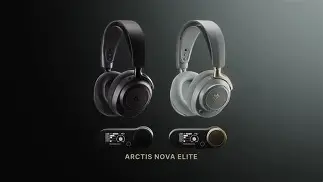
Second, think about your environment. If you live in a noisy apartment or have a loud household, the ANC here is better than nothing, but it won't give you that "silent chamber" feel. However, if you're mostly trying to drown out a computer fan or a distant TV, it’s perfectly adequate. One thing I noticed is that the ANC actually changes the sound profile slightly when turned on, adding a bit more "meat" to the lower end, which I actually preferred for music but found slightly distracting for tactical gaming.
Third, assess your tolerance for software. To get the most out of the Nova Elite, you *must* use the SteelSeries GG software. If you're the type of person who just wants to "plug and play" and never look at a settings menu again, you're only getting about 60% of what this headset is capable of. After testing for months, I can say that the default technical performance is good, but the *customized* performance is where the "Elite" name is earned.
Shop the latest Audio & Headphones picks on Amazon.
View Offers →A Note on Durability
I want to touch on the long-term wear and tear, as that’s a major concern for an expensive purchase. After six months, the hinge mechanism—which was a weak point in earlier Arctis models—remains rock solid. I haven't heard a single squeak or felt any loosening of the ear cup rotation. The finish on the headband hasn't chipped, though the metallic plates on the ear cups have picked up a few very fine scuffs from when I’ve set them down on my desk. The elastic headband has stretched slightly, but because it has multiple adjustment points, I was able to just move it to the tighter peg to restore the original feel.
Gaming Performance: The Real Test
I’ve put about 300 hours of purely competitive play into this headset. In tactical shooters, I noticed that the "Frequency Separation" is where this headset beats the competition. Most headsets struggle when there’s a lot of noise at once—grenades going off, teammates shouting, and music playing. Usually, it all turns into a muddy mess. In my experience, the Nova Elite maintains the "layers" of sound. Even in the middle of a chaotic firefight, I could still hear the distinct "clink" of a flashbang landing nearby. That clarity is why I keep coming back to it despite the minor comfort issues with my glasses.
I also spent a significant amount of time playing atmospheric horror titles. The low-frequency response is deep without being "farty." It captures the sub-bass rumbles that create tension without distorting. I was surprised by how much more immersive a game could feel just by having that extra bit of extension in the low end. It adds a physical weight to the experience that cheaper, more clinical headsets often lack.
Final Thoughts and Advice
After half a year of daily use, my conclusion is that the Arctis Nova Elite isn't for everyone, but it is for the person who wants one device to do everything at a high level. It’s the "Swiss Army Knife" of high-end audio. I’ve reached a point where putting on any other headset feels like a downgrade in convenience, even if there are other sets that might sound a tiny bit more "natural" or feel a bit lighter.
What I found was that the convenience of the hot-swap batteries and the dual-wireless connectivity outweighed the slight imperfections in the ANC and the microphone's AI gating. It’s a headset that fits into your life rather than forcing you to adjust your life to its limitations. If you are looking for the absolute best all-rounder available in 2026 and you have the budget to spare, the Nova Elite is a purchase you are unlikely to regret. I certainly don’t. Just be prepared to spend a few hours in the software suite during your first week to really dial in the sound—that's the secret to making this headset go from "great" to "exceptional."
In the end, the "Elite" moniker feels earned. It's not a perfect product—no headset is—but it's the most complete package I've used in years. It has survived my daily grind, my travel, and my late-night gaming binges without failing once. If you value a seamless workflow and have a passion for high-fidelity spatial audio, this is the one to beat.