The Ultimate Setup Guide for Your Mogo 2
The landscape of home entertainment has shifted dramatically over the last decade. While massive flat-screen televisions once reigned supreme as the center of the living room, a growing number of enthusiasts are turning toward portable projection for its versatility, scale, and cinematic feel. Among the frontrunners in the entry-level portable projector market is the Mogo 2, a device designed to balance high-end visual performance with a footprint small enough to fit in a backpack. However, owning a sophisticated piece of optical hardware is only half the battle. To truly unlock the potential of this device, users must navigate a precise setup process that accounts for lighting, acoustics, and software optimization.
This guide serves as a comprehensive resource for new owners and prospective buyers alike, detailing everything from the initial unboxing to advanced calibration techniques. By understanding the mechanical and digital nuances of the Mogo 2, users can transform any white wall or outdoor sheet into a professional-grade theater experience.
Detailed Product Analysis: Elevating the Portable Experience
The Mogo 2 represents a significant evolution in the portable projector category. At its core, the device utilizes a DLP (Digital Light Processing) display tech that is renowned for its contrast and reliability. What sets this specific model apart from its predecessors and many competitors is the advancement in light source efficiency and the integration of highly intelligent automated setup features. Most portable projectors in this price bracket suffer from "washed-out" images if there is even a hint of ambient light, but the Mogo 2 utilizes a refined optical engine that maximizes lumen output while maintaining color accuracy.
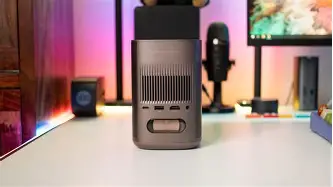
One of the most praised aspects of the hardware design is the cooling system. Portable units often struggle with thermal management, leading to loud fan noise that can distract from quiet movie scenes. The Mogo 2 employs a structured internal airflow system that keeps the unit cool while operating at a decibel level that is easily masked by its own internal speakers. Furthermore, the build quality feels substantial; it avoids the "plasticky" feel of budget mini-projectors, opting instead for a mesh-textured exterior that serves both an aesthetic and functional purpose for 360-degree sound output.
From a software perspective, the integration of a modern Android TV interface is a game-changer. Rather than relying on clunky, proprietary operating systems that lack app support, the Mogo 2 provides a familiar ecosystem. This allows for seamless integration with streaming services and smart home ecosystems. However, the true "magic" of the device lies in its ISA (Intelligent Screen Adaption) technology. This suite of features includes auto-focus, auto-keystone correction, and even intelligent obstacle avoidance, which ensures the image is perfectly rectangular and sharp even if the projector is placed at an awkward angle.
Pros and Cons
- High Lumens for its Class: Provides a significantly brighter image than many other ultra-portable projectors, allowing for viewing in dimly lit rooms, not just pitch-black environments.
- Intelligent Screen Adaption (ISA): The automated setup tools are remarkably fast, saving users from the frustration of manual keystone and focus adjustments every time the unit is moved.
- Excellent Color Calibration: Supports the DCI-P3 color gamut, offering more vibrant and realistic colors that are often missing in budget-friendly DLP projectors.
- Premium Build and Compact Footprint: The vertical design is space-efficient and feels durable enough for frequent travel or outdoor use.
- USB-C Power Support: The ability to power the unit via a high-wattage power bank increases its portability for camping or backyard movie nights.
- Lack of Internal Battery: Unlike some other models in the series, the Mogo 2 requires an external power source, which might catch some buyers off guard if they expect total cordless freedom.
- External Power Brick Size: While the projector is small, the included power adapter is somewhat bulky, which slightly impacts overall portability.
- Streaming App Workarounds: Due to licensing nuances, some major streaming platforms may require specific installation steps or the use of an external streaming stick for full 1080p support.
- Fixed Zoom: Since it lacks a physical zoom lens, resizing the image requires physically moving the projector further from or closer to the wall.
The Initial Setup: Step-by-Step Configuration
Step 1: Physical Placement and Distance
The first step to a great image is understanding the "throw ratio." For the Mogo 2, the distance from the wall determines the size of your screen. To achieve a standard 80-inch image, you will typically need about 7 feet of distance. While the device can project up to 120 inches or more, the brightness naturally diffuses as the image gets larger. For the best balance of size and clarity, aiming for a 60 to 100-inch screen is ideal. Ensure the projector is placed on a stable, level surface. While the auto-keystone can fix tilt, keeping the hardware as level as possible maintains the highest pixel density across the frame.
Step 2: Powering On and Orientation
Connect the USB-C cable to the rear port. Note that the Mogo 2 requires a specific power delivery (PD) profile; if you are using a third-party power bank, it must be capable of outputting 65W or higher. Once powered on, the device will initiate its first auto-focus cycle. If the image appears blurry, a quick press of the focus button on the remote will trigger a re-calibration. During this phase, you will also be prompted to pair the Bluetooth remote. Hold the "Home" and "Back" buttons simultaneously until the indicator light flashes.
Step 3: Network and Software Updates
In the Android TV setup menu, connect to your local Wi-Fi. It is highly recommended to use a 5GHz band if available to ensure smooth streaming of high-bitrate content. Once connected, navigate to the "System Update" section in the settings. Manufacturers often release "day-one" patches that improve the speed of the ISA technology or fix bugs in the color processing engine. Do not skip this step, as it can significantly impact the stability of the device during long viewing sessions.
Find top-rated Electronics products at great prices.
Browse Now →Specifications and Comparison
When evaluating the Mogo 2, it is helpful to see how it sits within the broader market of portable projectors. The following table compares the Mogo 2 against typical specifications found in the "Standard Mini" and "Premium Portable" categories.
| Feature | Standard Mini (Generic) | Mogo 2 | Premium Portable |
|---|---|---|---|
| Resolution | 480p or 720p | 720p (HD) with 1080p Support | 1080p or 4K |
| Brightness | 100 - 200 ISO Lumens | 400 ISO Lumens | 600 - 900 ISO Lumens |
| Color Gamut | 60% sRGB | 90% DCI-P3 | 95%+ DCI-P3 |
| OS | Basic Multimedia Player | Android TV | Android TV or Custom Linux |
| Auto-Setup | Manual Only | Full ISA (Focus/Keystone) | ISA + AI Adaptation |
Advanced Calibration and Usage Optimization
Once the basic setup is complete, enthusiasts may want to dive into the settings to squeeze every bit of performance out of the hardware. The "Standard" image mode is generally well-balanced, but for movies, switching to "Movie Mode" often softens the brightness slightly to provide deeper blacks and more natural skin tones. If you are using the projector for gaming, look for a "Game Mode" or "Low Latency" setting. This reduces the image processing time, which is crucial for fast-paced titles where input lag can be the difference between victory and defeat.
Sound is the other half of the cinematic equation. The Mogo 2 features two internal 8W speakers that are surprisingly robust for their size. They utilize a dual-sided diaphragm that creates a wider soundstage than traditional front-firing speakers. However, if you are setting up in a large room, you can utilize the 3.5mm auxiliary port or Bluetooth connectivity to link the projector to an external soundbar or home theater system. When using Bluetooth, be aware of "A/V Sync" issues; Android TV settings allow you to adjust the audio delay to ensure the sound precisely matches the mouth movements on screen.
Environmental factors also play a massive role. While the Mogo 2 is bright, it cannot fight direct sunlight. If you plan on using it during the day, blackout curtains are your best friend. For outdoor use, wait until "Blue Hour" (just after sunset) for the best results. Using a dedicated projector screen—even a budget-friendly foldable one—will provide a much higher "gain" than a standard painted wall, reflecting more light back to your eyes and making the colors pop.
Ultimate Buying Guide: Is the Mogo 2 Right for You?
Choosing a projector involves balancing your specific needs with the technical limitations of portable hardware. Before purchasing the Mogo 2, consider the following use cases to determine if it aligns with your lifestyle.
The Apartment Dweller
If you live in a space where a 75-inch TV is physically impossible to move or wall-mount, the Mogo 2 is an ideal solution. Its vertical footprint is no larger than a stack of three CDs, making it perfect for nightstands or coffee tables. You can project on the wall at the foot of your bed one night and move it to the living room the next. The ease of the ISA system means you won't spend 20 minutes recalibrating every time you switch rooms.
The Frequent Traveler and Digital Nomad
For those who spend time in hotels or Airbnbs, the Mogo 2 offers a "slice of home." Hotel TVs are notoriously restrictive and often small. The Mogo 2 allows you to carry a theater in your carry-on. Since it supports USB-C power, you aren't tethered to European or American wall outlets as long as you have a compatible universal power bank or adapter.
Discover deals on Electronics — updated daily.
Browse Now →The Outdoor Enthusiast
Backyard movie nights and camping trips are where this device truly shines. While the lack of an internal battery is a consideration, most modern outdoor enthusiasts already carry power stations. The high color accuracy ensures that even when projecting against a slightly off-white tent or a portable screen flapping in the breeze, the image remains legible and vibrant.
The Casual Gamer
While professional eSports players will always prefer high-refresh-rate monitors, casual gamers will find immense joy in playing titles like "Mario Kart" or "Animal Crossing" on a 100-inch "screen." The Mogo 2 handles these colorful, bright games exceptionally well. The built-in Android TV also supports various cloud gaming services, allowing you to play console-quality games with nothing more than a Bluetooth controller and a solid Wi-Fi connection.
Maintenance and Longevity Tips
To ensure your Mogo 2 lasts for years, a small amount of preventative maintenance is required. Projectors generate heat, and heat is the primary enemy of optical components. Periodically check the air intake and exhaust vents for dust buildup. A quick blast of compressed air (while the unit is off) can prevent the fans from having to work overtime. Additionally, always allow the projector to run its "cool down" cycle if you've been using it for several hours; don't immediately pack it into a tight, unventilated bag while the chassis is still hot.
Regarding the light source, the LED technology used in the Mogo 2 is rated for tens of thousands of hours. In practical terms, if you watched a two-hour movie every single day, the light source would last for over 20 years. Unlike older lamp-based projectors, you don't need to worry about the "bulb" burning out or the astronomical costs of replacement parts. This makes it a one-time investment for a generation of entertainment.
Conclusion
Setting up the Mogo 2 is a rewarding process that bridges the gap between high-tech engineering and user-friendly accessibility. By taking the time to position the unit correctly, optimizing the software settings, and considering the acoustics of your space, you can achieve a level of immersion that far exceeds its compact price tag. Whether it is used for a high-intensity gaming session, a quiet bedroom documentary, or a sprawling outdoor cinema night under the stars, the Mogo 2 stands as a testament to how far portable projection has come. It is no longer just a "novelty" for tech geeks; it is a legitimate centerpiece for any modern electronics setup, providing a flexible and visually stunning alternative to the static television screen. With the right configuration, your cinematic journey is only a power button press away.